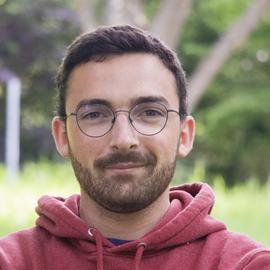
Biography
I’m a postdoctoral researcher located at the Kapteyn Astronomical Institute at the University of Groningen. I’m also affiliated with, and funded by, ARCO at the Open University of Israel.
I’m interested in understanding physics processes of the gas in galaxy clusters and filaments such as turbulence, shocks and accretion through cosmological simulations with the aim to help understand current and future observations.
You can find my publications below or on NASA/ADS as well as my talks, posters and outreach in my CV.
- Gas physics galaxy clusters environments and filaments
- Turbulence, shocks and accretion
- Cosmological simulations
Projects
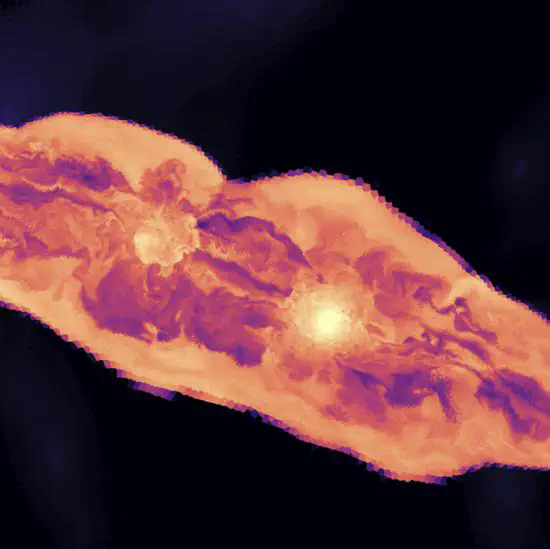
The WEFT project
The Web Evolution in Filament Targeted zoom simulations (WEFT) project, conducted by myself and Saleem Zaroubi, aims to better understand the gas dynamics in cosmic filaments by adapting the zoom technique of cosmological simulations onto these objects.

Studying gas physics in the simulated Virgo cluster
I use a simulated replica of the Virgo cluster to study the gas physics in and around this complex galaxy cluster. This case study serves as pathfinder in the scope of the larger LOCALIZATION project.

LOCALIZATION
Simulating the Local Universe
Latest publications
Pictures & Hobbies





Contact
- tlebeau@astro.rug.nl
- Kapteyn Astronomical Institute, Landleven 12, office 145, Groningen, 9747 AG